How Much Does Custom Software Development Cost in Morocco?
October 11, 2026
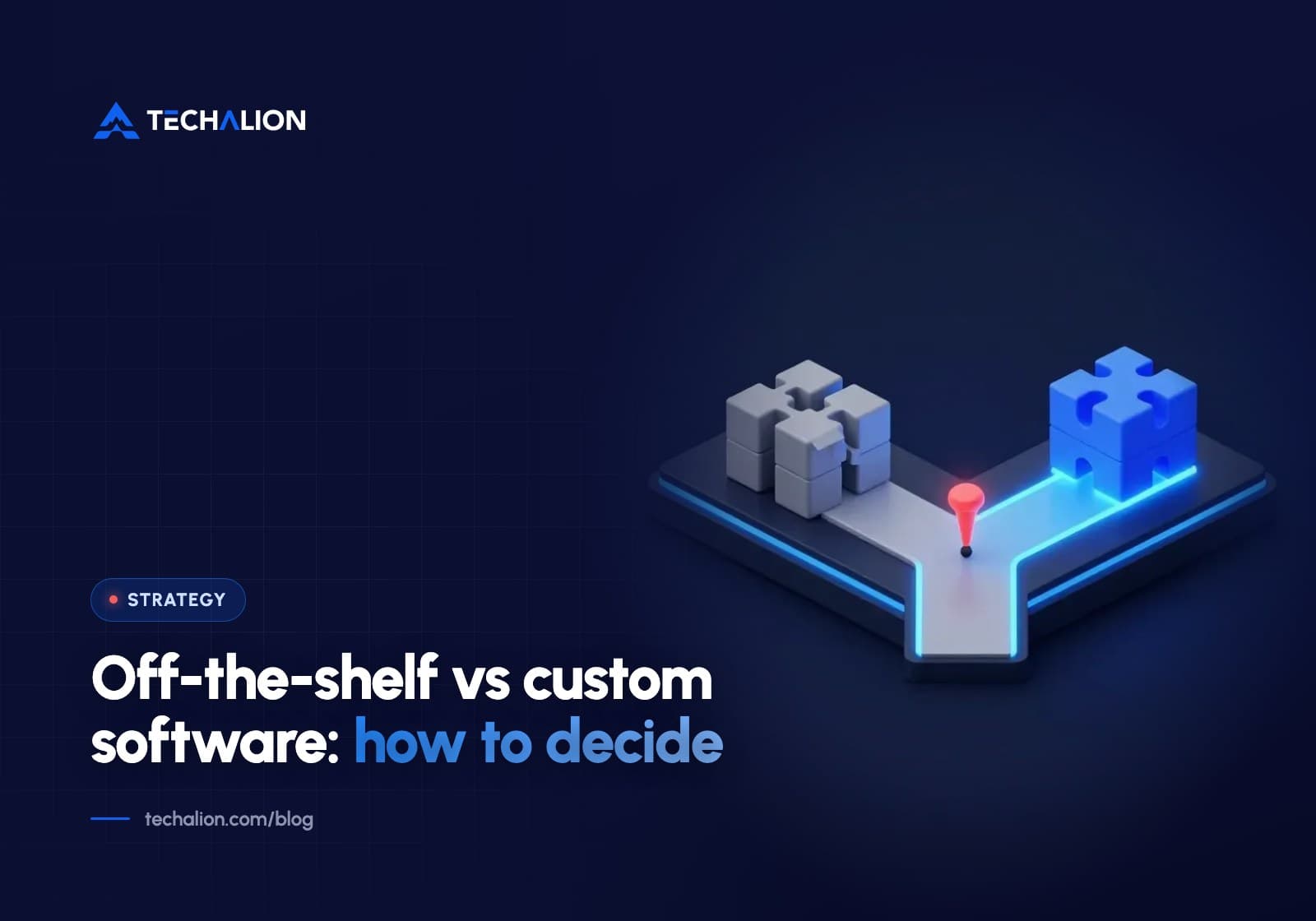
Every growing business eventually faces the same decision: buy a ready-made tool, or build software around the way it actually works. Both camps have strong advocates. SaaS vendors promise you can be up and running next week. Development agencies promise a perfect fit. Each is right in some cases and badly wrong in others.
The good news is that the decision does not have to be a matter of taste. A few honest questions will usually point clearly in one direction.
Buy when the process is standard. Email, accounting, video calls, basic CRM, document storage: thousands of companies do these things the same way, and specialised vendors have spent years polishing tools for them. Rebuilding that from scratch is almost never a good use of money.
Buy when speed matters more than fit. If you need something working this month and can adapt your process to the tool, a subscription is hard to beat.
And buy when you have no one to own the system. Custom software needs a product owner on your side and a technical partner on the other. Without either, even a well-built system will slowly drift away from what the business needs.
Build when the process is your competitive advantage. If the way you price, schedule, deliver or serve customers is what sets you apart, forcing it into a generic tool means giving up exactly what makes you different — or paying people to work around the software every day.
Build when the workarounds have become the system. A useful warning sign: your team runs a SaaS product, plus three spreadsheets, plus a WhatsApp group, plus someone who "knows how it really works". At that point you already have a custom system. It is just undocumented, fragile and impossible to scale.
Build when local rules are not covered. International tools often handle Moroccan regulations, formats and languages poorly — payroll, tax declarations, bank files, bilingual Arabic-French-English interfaces. Patching those gaps by hand every month has a cost that rarely appears in the subscription price.
And build when licence costs grow faster than you do. Per-user pricing looks cheap at ten users and very different at two hundred, especially once you add the premium tier needed for the one feature you actually use.
In practice, the best architecture is rarely all-or-nothing. Most of the systems we build at TECHALION sit alongside off-the-shelf tools rather than replacing them: standard software for standard work, and custom software for the core process that makes the business different — connected together so data flows without manual re-entry.
That approach keeps costs focused where they create value, and it avoids the two classic failures: rebuilding commodities nobody needed to rebuild, and bending a unique business around a tool designed for someone else.
Write down the process in question and ask three things. Is it the same in every company in your industry? Would changing it to fit a tool harm your customers or your margins? How much time does your team spend today working around the software you already have?
If the answers are yes, no and very little, buy. If they are no, yes and a lot, it is time to consider custom software. And if you are somewhere in between, a short discovery phase will tell you which parts to buy, which to build, and how to connect them. Our team can help you run that exercise on your own processes.

October 11, 2026

October 11, 2026